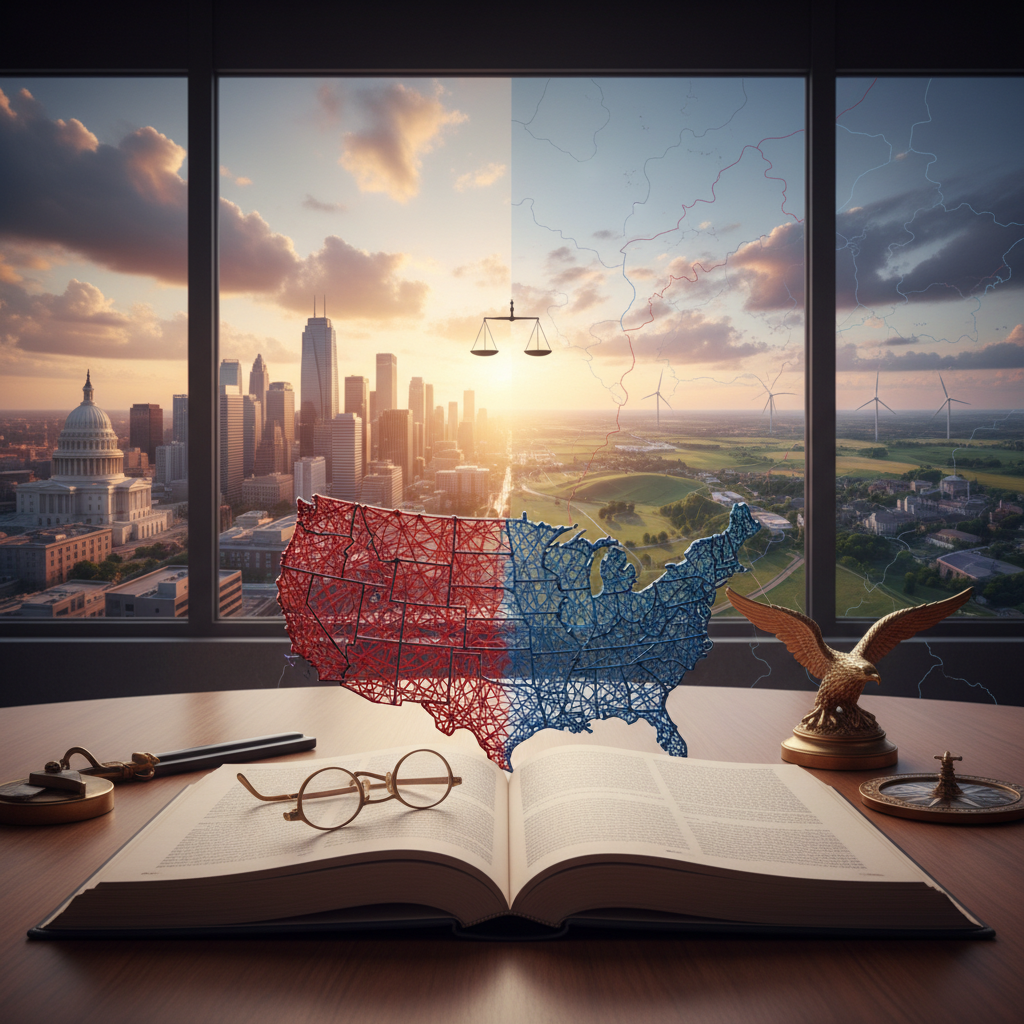
The contemporary political landscape of the United States is characterized by profound complexity, rapid transformation, and historic levels of ideological polarization. Understanding the dynamics at play requires moving beyond surface-level political debates and examining the structural, demographic, and cultural forces reshaping governance and public life. For observers both domestic and international, the political environment in America presents a fascinating, yet often volatile, case study in modern democracy under stress. The nation grapples with deep fissures concerning economic inequality, social justice, and the fundamental role of government, all amplified by a fractured media ecosystem.
The core challenge facing the political system is not merely disagreement, but a fundamental breakdown in shared operational assumptions—the belief that opposing parties can effectively collaborate to solve national problems. This environment of legislative gridlock and intensified partisan warfare has eroded public trust in democratic institutions, creating a climate where political identity often supersedes policy consensus. As we navigate this complex terrain, it is essential to analyze the interconnected factors driving this political reality, from shifts in voter behavior to the institutional rules that govern electoral outcomes.
This comprehensive analysis aims to dissect the major forces defining the current political era, providing an in-depth look at the structural impediments and societal trends that dictate the direction of politics in America. By examining the roots of polarization, the role of key institutions, and emerging demographic realignments, we can gain a clearer understanding of the challenges and potential pathways forward for the world’s oldest continuous democracy.
The Deepening Partisan Divide in America
The most defining characteristic of the current political environment in America is the severity of the partisan divide. Unlike previous eras where political parties might disagree on means but share common national goals, today’s division is increasingly ideological, cultural, and geographic. This phenomenon, often termed affective polarization, means that citizens not only hold opposing policy views but also harbor significant distrust and antipathy toward members of the opposing political group. This division permeates local communities, workplaces, and even family structures, making political compromise exceptionally difficult.
The sorting of the population into distinct ideological camps has transformed the nature of political competition. Where conservative Democrats and liberal Republicans once provided crucial swing votes, those moderating influences have largely vanished. Members of Congress now represent increasingly homogenous districts, incentivizing them to appeal to their party’s extreme base rather than seek consensus across the aisle. This structural incentive contributes directly to legislative paralysis, as prioritizing ideological purity often takes precedence over pragmatic policymaking. Furthermore, this intense polarization has been exacerbated by the rise of highly targeted political messaging and the decline of traditional, non-partisan news sources, allowing citizens to self-select into information silos that reinforce existing biases.
Ideological Sorting and Legislative Gridlock
Ideological sorting refers to the process where individuals align their political identity across multiple issue areas—economic, social, and cultural—resulting in two distinct, internally consistent political tribes. The Republican party has largely consolidated around socially conservative and fiscally libertarian viewpoints, while the Democratic party has unified around socially progressive policies coupled with expanded government intervention in economic and social safety nets. This high correlation between different policy stances makes negotiation nearly impossible, as concessions on one issue are viewed as betraying the entire ideological framework. The result is chronic legislative gridlock, particularly in areas requiring broad bipartisan support, such as immigration reform, infrastructure spending, and long-term fiscal planning.
The institutional rules of the Senate, particularly the filibuster, further empower minority parties to obstruct the majority agenda, intensifying the feeling that the political system is unresponsive. This dynamic feeds public cynicism and increases the pressure on executive and judicial branches to act unilaterally, leading to a phenomenon known as the politicization of expertise, where even technical issues become defined by partisan affiliation.
The Role of Media and Information Silos
Modern media consumption habits play a critical role in sustaining and deepening the partisan divide. The shift from centralized, three-network broadcasting to a fragmented digital landscape means individuals are increasingly exposed only to information confirming their existing worldview. Cable news networks, social media algorithms, and hyper-partisan online outlets have created information silos, or echo chambers, that filter out dissenting viewpoints and amplify emotionally charged content. This environment fosters misinformation and disinformation, making it difficult for citizens to agree on basic facts, a prerequisite for effective democratic debate. Research shows that exposure to partisan media increases both ideological extremity and affective polarization, making political opponents seem not just wrong, but morally suspect.
Structural Challenges to Governance and Democracy in America
Beyond the cultural and ideological splits, the political infrastructure of the United States faces significant strain due to institutional rules and practices designed in a different era. These structural challenges often clash with modern democratic ideals of fairness and equal representation, leading to outcomes that feel illegitimate to large segments of the population.
The Electoral College and Representational Fairness
The Electoral College, established by the founders as a compromise mechanism, continues to be a central point of contention. While designed to balance the power of large states against smaller ones, in practice, it can lead to situations where the winner of the national popular vote loses the presidency, undermining the principle of “one person, one vote.” This system disproportionately empowers voters in a handful of swing states, while voters in reliably red or blue states often feel their votes are immaterial in presidential elections.
Compounding this challenge is the issue of gerrymandering—the manipulation of electoral district boundaries to favor one party over another. Extreme partisan gerrymandering ensures that many congressional districts are safe seats, reducing competition and further insulating incumbent politicians from accountability. This system contributes significantly to the ideological sorting in the House of Representatives, as politicians fear primary challenges from the extreme wings of their parties more than general election defeat. Addressing these representational fairness issues is key to restoring faith in the democratic process in America.
The Supreme Court and Judicial Review
The composition and decisions of the Supreme Court have become highly politicized, reflecting the broader partisan struggle. Lifetime appointments and the court’s immense power of judicial review mean that nominations are viewed as existential battles over the long-term direction of the country. Recent high-profile rulings on issues such as abortion, gun control, and administrative power have solidified the court’s role as a primary political battleground, leading to accusations of judicial activism rather than neutral legal interpretation. This politicization reduces the perceived legitimacy of the judiciary, traditionally viewed as the least partisan branch of government. The stakes in judicial appointments are exceptionally high because the court often acts as the final arbiter on critical social and economic policy questions that Congress has failed to resolve.
The Impact of Campaign Finance on Policy
The landscape of campaign finance significantly influences the political process. Decisions like Citizens United v. FEC have allowed for the proliferation of Super PACs and dark money groups, injecting vast, often undisclosed, amounts of corporate and special interest funding into elections. This influx of money raises concerns about undue influence, where the interests of wealthy donors and large corporations may override the needs of the average citizen. The high cost of running for office creates a barrier to entry for candidates without personal wealth or strong fundraising networks, further entrenching the political establishment and potentially skewing legislative priorities toward donor interests rather than broad public welfare.
The influence of money is not limited to elections; it extends into lobbying efforts that shape the specifics of legislation and regulation, contributing to the public perception that the system is rigged against them. Addressing campaign finance reform remains a perennial, yet highly contentious, political goal.
Shifting Political Demographics and Voter Behavior
Underneath the daily political drama, profound demographic shifts are fundamentally reshaping the electorate and the long-term electoral prospects of both major parties. These changes involve race, age, education, and geography, creating new political alignments and intensifying the cultural clashes that define the current era.
Generational Divides and Emerging Voter Blocs
Generational politics is becoming increasingly salient in America. Younger generations (Millennials and Gen Z) tend to be more racially diverse, socially liberal, and supportive of expansive government intervention on issues like climate change and economic inequality compared to older generations (Baby Boomers and the Silent Generation). This generational gap is reflected in voting patterns, with younger voters leaning heavily Democratic, while older voters remain a crucial base for the Republican party.
Simultaneously, educational attainment has become a powerful predictor of political affiliation. Voters with four-year college degrees, especially in suburban areas, have increasingly drifted toward the Democratic party, while non-college-educated white voters, particularly in rural areas, have become a cornerstone of the modern Republican coalition. These educational and geographical splits contribute to the cultural polarization, as voters often live in communities that reinforce their political identity, further separating the concerns and priorities of urban, suburban, and rural populations.
The Crucial Role of Swing States
Despite the overall national polarization, a small number of swing states—such as Pennsylvania, Arizona, Georgia, and Wisconsin—remain the pivotal battlegrounds that determine presidential and Senate control. These states are defined by delicate internal balances of demographic groups, including suburban professionals, industrial workers, and growing minority populations. Political campaigns dedicate enormous resources to mobilizing voters in these specific areas, often ignoring vast swaths of the country considered reliably “safe.”
The focus on swing states often leads to national policy discussions being framed around the specific concerns of these narrow geographic areas, sometimes at the expense of addressing broader national issues. Understanding the micro-politics of these key states is essential for predicting electoral outcomes and understanding the strategic priorities of both parties in America.
Key Demographic Trends Shaping the US Electorate
| Trend | Political Impact |
|---|---|
| Increased Racial Diversity | Strengthens Democratic base in urban/suburban areas; contributes to cultural backlash in some white, rural areas. |
| Educational Polarization | College-educated voters shift left; non-college voters shift right, deepening the cultural divide. |
| Urbanization/Suburbanization | Concentration of liberal voters in cities; suburbs become the primary battleground for moderate voters. |
Economic Inequality and Its Political Ramifications in America
Economic anxiety and the widening gap between the wealthiest citizens and the rest of the population are powerful underlying drivers of political unrest and polarization. The failure of the political system to adequately address stagnant wages, rising healthcare costs, and pervasive economic insecurity fuels populist movements on both the left and the right, challenging the traditional centrist consensus.
The Politics of Inflation and Fiscal Policy
Recent economic volatility, particularly high inflation, has become a central political weapon. Voters often hold the party in power accountable for economic hardship, regardless of the complex global factors at play. Debates over fiscal policy—taxation, government spending, and national debt—are highly polarized. Democrats generally advocate for targeted spending programs funded by higher taxes on corporations and the wealthy to address inequality, while Republicans prioritize tax cuts, deregulation, and reduced government spending, arguing that these measures stimulate free-market growth. The inability to forge a consistent, long-term fiscal strategy due to partisan turnover creates economic uncertainty and contributes to cyclical political crises, such as recurring debates over the debt ceiling.
Healthcare and Social Safety Nets as Political Flashpoints
Healthcare policy remains arguably the most persistent political flashpoint in America. The debate revolves around whether healthcare is a fundamental right to be guaranteed by the government (the Democratic position) or a market commodity best managed by private enterprise (the Republican position). The Affordable Care Act (ACA) remains a symbolic battleground, representing the deep divide over the size and scope of the federal government’s role in social welfare. Similarly, discussions around Social Security, Medicare, and other social safety nets are fraught with tension. Any perceived threat to these popular programs generates intense political backlash, making meaningful reform exceptionally difficult.
The Future of Political Engagement and Trust in America
The current political climate, marked by intense conflict and institutional erosion, poses significant questions about the future stability of governance in America. Restoring functionality requires not only institutional reform but also a fundamental shift in how citizens engage with politics and how leaders manage conflict.
Grassroots Activism and Local Politics
Despite widespread frustration with federal gridlock, there has been a notable resurgence in grassroots political engagement. Citizens disillusioned with Washington are increasingly focusing their energy on local and state politics, where policy changes can often be enacted more quickly and tangibly. Issues such as housing, local education policy, and criminal justice reform are seeing intense mobilization efforts. This shift toward localism is crucial because state capitals often serve as laboratories for policy innovation, and local elections determine the officials who administer elections and shape the political landscape from the ground up. This renewed focus on local governance offers a potential antidote to the paralysis at the national level.
Rebuilding Public Trust in Democratic Institutions
A critical challenge for the future of America is the restoration of public trust in core democratic institutions—the electoral process, the judiciary, and the non-partisan civil service. This erosion of trust is linked directly to the perception that political outcomes are predetermined or illegitimate. Efforts to combat misinformation, enhance transparency in government operations, and secure electoral integrity are vital. Furthermore, political leaders have a responsibility to model behavior that respects the legitimacy of opposition and adheres to democratic norms, ensuring that political competition remains within the bounds of constitutional governance. Restoring civility and shared purpose is necessary to ensure the long-term viability of the American democratic experiment.
The political landscape of America today is undeniably complex, shaped by deep-seated ideological polarization, structural impediments, and dynamic demographic shifts. The nation stands at an inflection point, where the pressures of partisan warfare and institutional distrust challenge the very foundations of its governance. Navigating this turbulent environment requires more than just political skill; it demands renewed civic engagement, a commitment to factual discourse, and a willingness from leaders across the spectrum to prioritize national cohesion over factional gain. While the challenges are immense—from legislative gridlock and campaign finance issues to securing representational fairness—the vitality of grassroots movements and the continued public debate over core values demonstrate that the fundamental democratic spirit remains active. The path forward necessitates a concerted effort to mitigate polarization, reform outdated institutional mechanisms, and ultimately, rebuild the shared sense of trust necessary for a functioning, pluralistic democracy to thrive.
]