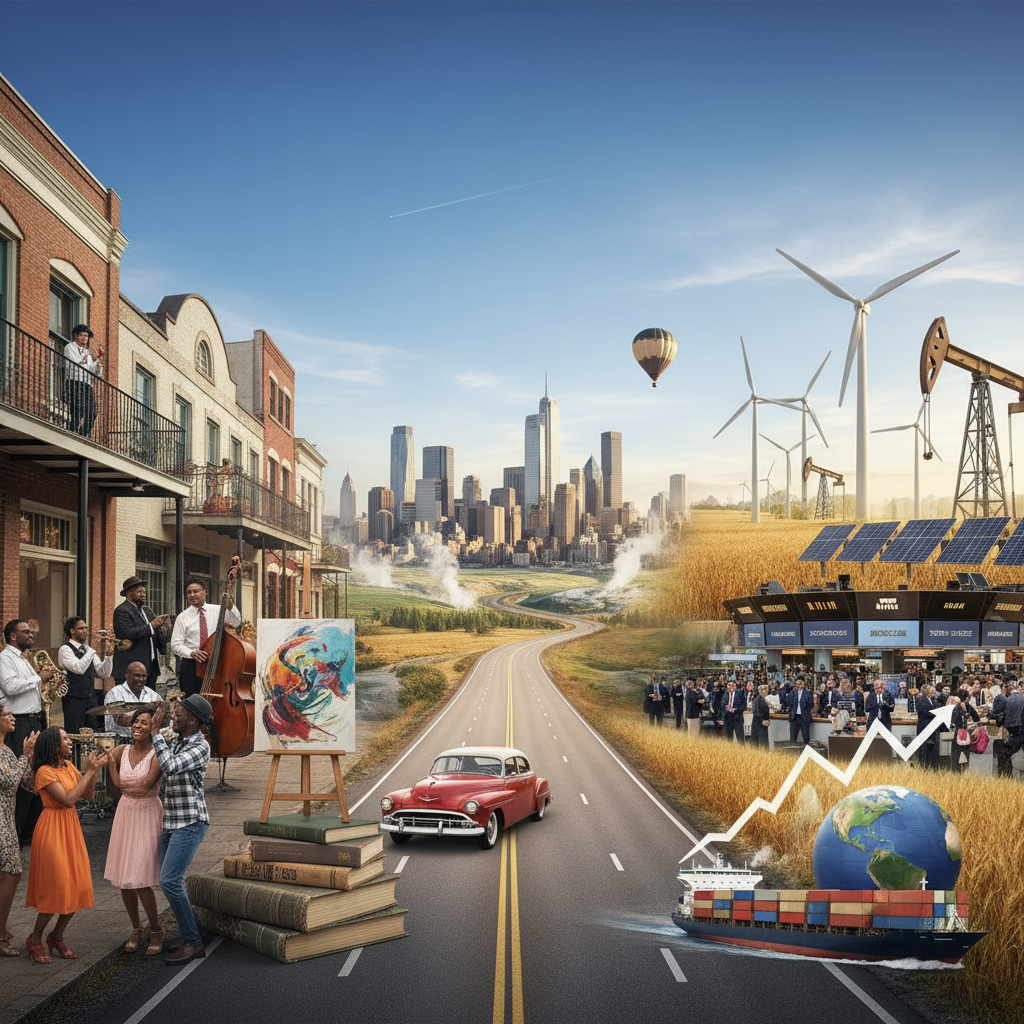
The United States, often simply referred to as America, stands as a global titan—a nation defined by its immense geographical scale, profound cultural diversity, and unparalleled economic influence. Understanding this sprawling republic requires delving beneath the surface narratives to appreciate the intricate interplay between its societal fabric, its vast tourism potential, and the complex machinery of its economy. From the bustling financial centers of the East Coast to the innovative tech hubs of the West, America represents a dynamic experiment in democracy and capitalism.
This comprehensive analysis aims to provide expert insights into the core pillars that define modern America. We will navigate the nuances of American identity, dissect the logistical realities of traversing its massive territory, and analyze the key sectors that maintain its status as the world’s foremost economic powerhouse. For travelers, policymakers, and business leaders alike, grasping the complexity and dynamism inherent in the American experience is essential for effective engagement and strategic planning.
Understanding the Cultural Tapestry of America
The culture of the United States is perhaps its most defining, yet most challenging, characteristic to encapsulate. It is a vibrant, often contradictory, blend forged by centuries of immigration, regional isolation, and rapid technological advancement. Rather than a singular, monolithic identity, American culture is best viewed as a complex mosaic, where regional distinctions often outweigh national commonalities.
Regional Cultural Differences Across America
The sheer size of America ensures profound cultural variation across its geographical regions. These differences manifest in everything from dialect and cuisine to political leanings and social norms. Understanding these regional identities is crucial for anyone seeking to truly explore the country:
- The Northeast: Characterized by historical depth, intellectual rigor, and dense urbanization. Cities like Boston, New York, and Philadelphia serve as centers for finance, education, and media. The culture here often emphasizes speed, directness, and tradition.
- The South: Known for its distinctive hospitality, rich musical heritage (Jazz, Blues, Country), and deeply ingrained history. While modernization is rapid, the culture maintains a slower pace and strong emphasis on community and family.
- The Midwest (The Heartland): Often viewed as the agricultural and industrial backbone of America. Values here typically center on hard work, practicality, and community spirit. Key urban centers like Chicago and Detroit drive manufacturing and logistics.
- The West Coast: Defined by innovation, progressiveness, and a focus on lifestyle and environmental consciousness. California, the epicenter of this region, drives global trends in technology (Silicon Valley), entertainment (Hollywood), and digital media.
- The Mountain West and Southwest: Characterized by vast open spaces, resource extraction, and a strong connection to Native American and Spanish colonial history. This area offers a unique blend of rugged individualism and modern development.
The Role of Immigration and the Melting Pot Reality
For centuries, the concept of America as a “melting pot” dominated cultural discourse, suggesting that immigrant cultures assimilate into a uniform American identity. However, modern sociological analysis often favors the “salad bowl” metaphor, where distinct cultural elements retain their identity while contributing to the overall flavor of the nation. Immigration remains a powerful, continuous force shaping American society, constantly injecting new languages, foods, and perspectives into the mainstream.
The ongoing dialogue surrounding race, ethnicity, and identity is central to the American experience. This dialogue is reflected in the nation’s arts, literature, and political movements, showcasing a society grappling with its own historical complexities while striving for a more inclusive future. The global influence of American soft power—through music, film, and digital platforms—further exports these evolving cultural conversations worldwide.
Navigating Travel and Tourism Across America
Traveling across America is an endeavor demanding time and planning, given the country’s 3.8 million square miles. Tourism is a vital economic sector, offering everything from pristine wilderness experiences to world-class urban exploration. The infrastructure supporting this travel is extensive, yet often challenged by the distances involved.
Iconic Destinations and Natural Wonders
One of the greatest draws of the United States is its unparalleled collection of natural landscapes, protected within a robust system of National Parks. These areas not only drive tourism but also serve as crucial centers for ecological research and preservation.
| Region | Iconic Natural Attraction | Key Experience |
|---|---|---|
| West | Grand Canyon National Park | Hiking, geological study, scenic overlooks |
| Mountain West | Yellowstone National Park | Geothermal features (geysers), wildlife viewing |
| East Coast | Acadia National Park | Coastal hiking, historical lighthouses |
| Alaska | Denali National Park | Mountaineering, extreme wilderness exploration |
Beyond the parks, road trips are a quintessential American travel experience. Routes like Route 66, the Pacific Coast Highway (PCH), and the Blue Ridge Parkway offer travelers deep immersion into regional cultures and landscapes, supporting countless small businesses along the way.
Urban Exploration: Key Cities and Their Unique Appeals
American cities function as global hubs for finance, technology, and culture, each offering a distinct urban experience:
New York City: The undisputed financial and media capital. Visitors flock to cultural institutions, Broadway, and architectural marvels. NYC is a primary gateway for international travel to America.
Los Angeles: The global center of the entertainment industry (Hollywood). LA is sprawling, defined by diverse neighborhoods, beaches, and a reliance on automotive travel, reflecting the large scale of Southern California life.
Chicago: An architectural pioneer and major transportation hub. Located in the Midwest, Chicago is celebrated for its deep-dish pizza, blues music, and comprehensive public parks system along Lake Michigan.
Transportation and Infrastructure Challenges in America
While the US boasts the world’s most extensive highway network, infrastructure maintenance remains a persistent challenge and a major area of political debate. Air travel is highly developed, with major carriers facilitating domestic and international movement. However, high-speed rail lags behind many European and Asian counterparts, making long-distance domestic travel often reliant on flying or driving.
For tourists, navigating the transportation landscape requires flexibility. While major cities offer robust public transit (e.g., the New York Subway, D.C. Metro), vast areas of the country necessitate renting a car to fully appreciate the varied geography and reach remote attractions. The sheer scale of America dictates that travel planning must account for significant time zone changes and extended transit times.
Analyzing the Economic Powerhouse of America
The economy of the United States is the largest in the world by nominal GDP, characterized by high levels of innovation, a highly diversified industrial base, and a capitalist structure driven heavily by consumer spending. Its influence extends globally, affecting trade policies, financial markets, and technological development across continents.
Key Economic Sectors Driving Growth in America
The sustained strength of the American economy relies on several key sectors that dominate global markets:
- Technology and Information Services: Centered primarily in Silicon Valley (California), Seattle, and Austin, this sector drives global innovation in software, hardware, artificial intelligence, and cloud computing. Companies born in America often set the global standard for digital transformation.
- Financial Services: Wall Street in New York City remains the global nexus for banking, investment, insurance, and asset management. The stability and regulatory framework of the US financial system are critical to international trade and capital flow.
- Manufacturing and Aerospace: While overseas production has increased, specialized, high-value manufacturing—particularly in aerospace (Boeing, SpaceX), defense, and advanced materials—remains a cornerstone of the American industrial base.
- Healthcare and Biotechnology: Driven by massive R&D investment, the US leads the world in pharmaceutical development and medical technology. This sector is significant both domestically (in terms of GDP share) and internationally (in terms of medical breakthroughs).
The Federal Reserve (the Fed) plays a pivotal role in managing the monetary policy of America, using tools like interest rate adjustments to manage inflation and stabilize the job market. The Fed’s decisions ripple through global financial markets, underscoring the interconnectedness of the US economy with the rest of the world.
Innovation and Entrepreneurship: The Silicon Valley Model
A defining feature of the American economy is its robust culture of entrepreneurship, fueled by venture capital (VC) and a legal framework that rewards risk-taking. Silicon Valley is the archetype of this ecosystem, fostering rapid growth and disruption across multiple industries. This model relies on:
- Access to massive pools of private capital (VC and angel investors).
- World-class research universities (e.g., Stanford, MIT) that provide a talent pipeline.
- A culture that accepts failure as a necessary step toward eventual success.
This relentless pursuit of innovation ensures that America remains at the forefront of technological advancement, from developing advanced semiconductors to pioneering the commercialization of space travel.
Economic Challenges and Policy Implications for America
Despite its strength, the American economy faces significant structural challenges. Income inequality has widened substantially over the past few decades, creating societal and political strain. Furthermore, the national debt remains a major long-term concern, requiring careful fiscal management.
Trade policy is another critical area. As globalization evolves, America must continually negotiate complex trade agreements to protect its intellectual property and maintain access to international markets while balancing domestic manufacturing interests. The ongoing shift toward green energy and sustainable infrastructure also presents both an enormous investment challenge and a massive opportunity for job creation and technological leadership.
The Global Influence and Future Trajectory of America
The influence of America extends far beyond its borders, encompassing political alliances, military strength, and cultural diffusion. This global standing is often referred to as “soft power,” driven by the attractiveness of American culture, political ideals, and technological dominance.
Soft Power Projection and Diplomacy
American universities, think tanks, and non-governmental organizations (NGOs) are crucial conduits for projecting American values and expertise worldwide. Furthermore, Hollywood films, popular music, and fashion trends shape global consumer tastes and cultural norms. This soft power often supports diplomatic efforts, providing leverage in international negotiations.
In the geopolitical sphere, America is central to numerous alliances (like NATO) and global institutions (like the UN and the IMF). The nation’s foreign policy decisions have immediate and profound consequences for global stability, trade routes, and human rights.
Future Trends Shaping America
The future trajectory of the United States will be defined by its ability to navigate several interconnected challenges:
Digital Transformation: The continued integration of AI, machine learning, and automation into the workforce will necessitate massive upskilling and educational reform to prevent significant job displacement and maintain global competitiveness.
Climate Change and Sustainability: Policy decisions regarding renewable energy, carbon emissions, and infrastructure resilience will fundamentally alter the American energy landscape and its relationship with the global environment. Major investments in sustainable infrastructure will be necessary across America.
Demographic Shifts: The population is becoming older and increasingly diverse. This shift influences labor markets, healthcare demands, and political dynamics, requiring adaptive social and economic policies.
The exploration of America reveals a nation of immense contrasts—a place where technological innovation meets deep historical roots, and where regional isolation coexists with global connectivity. Its culture is perpetually evolving, its travel destinations are breathtakingly diverse, and its economy remains the engine driving global financial stability and technological progress. Navigating the complexities of the United States requires acknowledging its challenges—from infrastructure gaps to economic inequality—while appreciating its unparalleled capacity for reinvention and leadership. As America enters a new era defined by digital transformation and geopolitical realignment, its dynamic nature ensures that it will remain a subject of intense global scrutiny and fascination, continuing to shape the world’s economic and cultural landscape for decades to come.