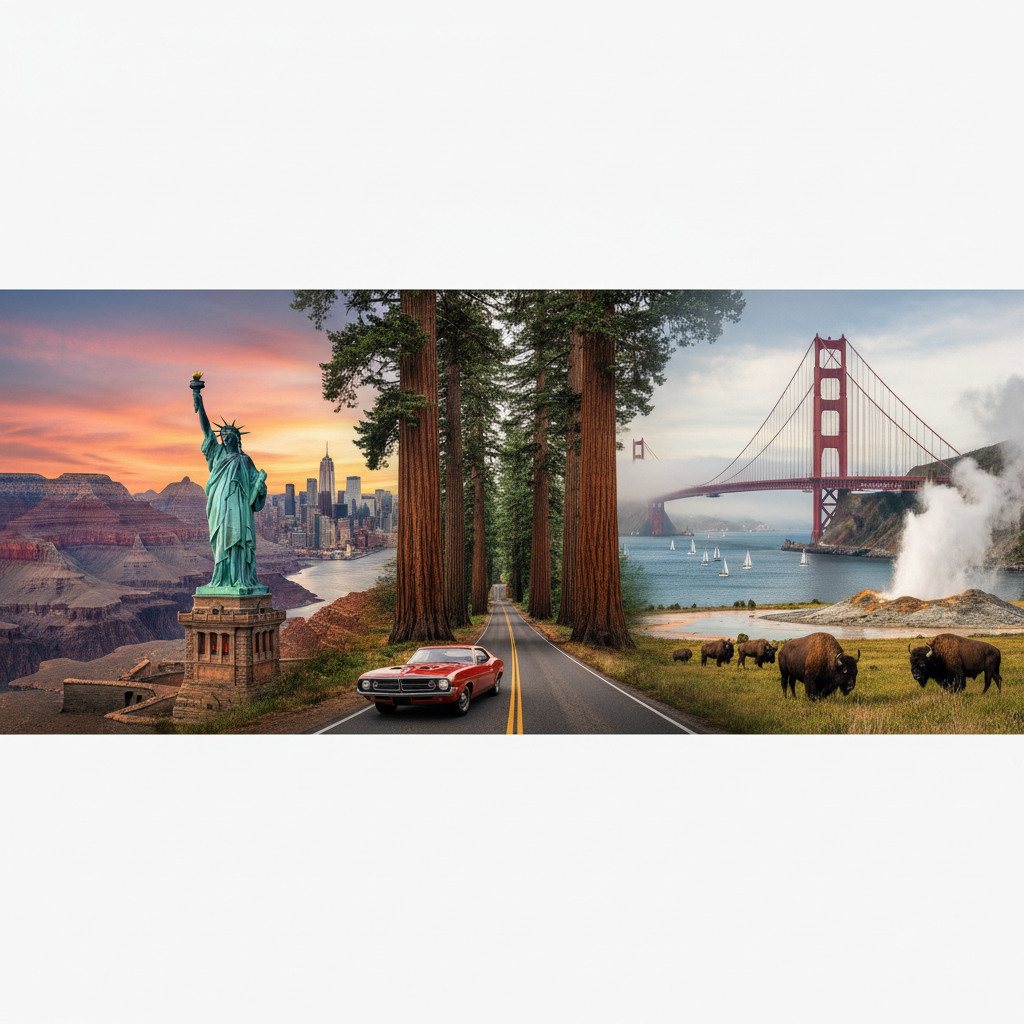
The United States, often simply referred to as America, is a land of unparalleled geographic and cultural diversity. Stretching from the icy expanse of Alaska to the tropical warmth of Hawaii, and encompassing everything from bustling metropolitan centers to serene, untouched wilderness, planning a trip here can be overwhelming due to the sheer volume of incredible destinations. For travelers seeking adventure, history, culinary excellence, or simply breathtaking natural beauty, America offers a lifetime of exploration.
As professional SEO experts and subject matter specialists in global travel, we understand that finding the absolute ‘best’ places requires a balance of iconic landmarks and unique, localized experiences. This definitive guide cuts through the noise, providing an in-depth look at the must-see locations that define the spirit of travel across the entirety of America, ensuring your itinerary is optimized for both unforgettable memories and rich cultural immersion. We will explore the coasts, the heartland, the mountains, and the islands that collectively make travel in America an extraordinary pursuit.
Exploring the Iconic Coasts of America: East Meets West
The duality of America is perhaps best exemplified by its two major coastlines. These regions not only boast massive populations and economic power but also represent fundamentally different approaches to life, history, and modernity. Understanding the character of each coast is essential when planning any large-scale trip across the country.
The Dynamic Energy of the East Coast
The Eastern Seaboard is the historical cradle of the nation, where European settlement first took root and where the foundational concepts of modern America were forged. Travel here is often steeped in history, architecture, and intense urban energy.
New York City: The Urban Epicenter
No discussion of travel in America is complete without mentioning New York City. This global hub of finance, fashion, art, and theatre offers an unmatched intensity. From the towering skyscrapers of Midtown Manhattan to the artistic neighborhoods of Brooklyn and the historical significance of Ellis Island, NYC is a microcosm of global culture. Visitors should dedicate time not just to the tourist staples like Times Square and the Statue of Liberty, but also to exploring world-class museums like the Metropolitan Museum of Art and wandering the diverse streets of Queens and the Bronx.
Washington D.C.: History and Governance
As the nation’s capital, Washington D.C. serves as the epicenter of American governance and memory. The city is defined by its powerful monuments—the Lincoln Memorial, the Washington Monument, and the Capitol Building—all linked by the expansive National Mall. Furthermore, D.C. is home to the Smithsonian Institution, the world’s largest museum, education, and research complex, offering free access to unparalleled collections of history, art, and science. A trip here provides a deep understanding of the political and historical journey of America.
Boston and Philadelphia: Revolutionary Roots
For those interested in the Revolutionary War era, Boston and Philadelphia are essential stops. Boston’s Freedom Trail guides visitors through 16 historically significant sites, including the site of the Boston Massacre and Paul Revere’s house. Similarly, Philadelphia is home to Independence Hall, where the Declaration of Independence and the U.S. Constitution were debated and adopted, securing its place as a cornerstone of modern America.
The Sun-Drenched Charm of the West Coast
The West Coast, encompassing California, Oregon, and Washington, represents innovation, natural beauty, and a laid-back, progressive culture. This region is defined by its dramatic Pacific coastline and technological foresight.
California’s Diverse Offerings
California is a destination unto itself, offering everything from glamorous city life to unparalleled natural wonders. Los Angeles is the global center of the entertainment industry, attracting millions to Hollywood, Santa Monica, and Beverly Hills. Further north, San Francisco captivates visitors with its iconic Golden Gate Bridge, historic cable cars, and unique neighborhoods like Chinatown and the Mission District. Beyond the cities, California is the gateway to some of the finest natural parks in America, including Yosemite and Redwood National Park.
The Pacific Northwest Vibe
The Pacific Northwest, anchored by Seattle, Washington, and Portland, Oregon, offers a unique blend of lush, green landscapes and thriving tech and culinary scenes. Seattle is known for the Space Needle, Pike Place Market, and its pivotal role in music history and technology. Portland, often celebrated for its eccentric culture, craft breweries, and food cart scene, provides a relaxed counterpoint to the intensity of its southern neighbors. The proximity of these cities to stunning natural environments, such as the Olympic Peninsula and the Cascade Mountains, makes them perfect bases for exploration.
The Untamed Majesty: America’s National Parks
A significant portion of the appeal of traveling across America lies in its commitment to preserving vast tracts of wilderness. The National Park System is a treasure trove of majestic landscapes, offering experiences that connect visitors directly with the raw power and beauty of nature. These parks are non-negotiable stops for any comprehensive itinerary.
The Grandeur of the Southwest Parks
The Southwestern US is home to dramatic canyons, towering mesas, and unique desert ecosystems that showcase geological history spanning millennia.
- The Grand Canyon (Arizona): Arguably the most famous natural landmark in America, the Grand Canyon offers views so vast they defy description. Whether viewing from the South Rim, North Rim, or venturing below on a challenging hike, the scale of this geological wonder is humbling.
- Zion National Park (Utah): Known for its massive sandstone cliffs and narrow slot canyons, Zion offers world-class hiking, including the famous Angels Landing and The Narrows. Its accessibility and stunning vertical landscapes make it one of the most visited parks in America.
- Arches National Park (Utah): This park features over 2,000 natural sandstone arches, most notably Delicate Arch. The deep red rock formations set against the clear blue sky create photographic opportunities unmatched anywhere else.
Mountainous Wonders and Wildlife
From the Rocky Mountains to the Sierra Nevada, America’s mountainous regions provide high-altitude adventure and opportunities to observe iconic wildlife.
Yellowstone National Park: Geothermal Marvels
Spanning Wyoming, Montana, and Idaho, Yellowstone is the world’s first national park and a geothermal hotspot. It is home to more than half of the world’s geysers, including the iconic Old Faithful. Beyond its unique geology, Yellowstone is a wildlife haven, offering chances to see bison, elk, wolves, and grizzly bears in their natural habitat. This park truly embodies the wild heart of America.
Yosemite National Park: Granite Icons
Located in California’s Sierra Nevada, Yosemite is famous for its steep granite cliffs (El Capitan and Half Dome), giant sequoia groves, and spectacular waterfalls. It is a haven for climbers, hikers, and photographers, representing the pinnacle of mountain scenery in the western part of America.
Planning Your National Park Adventure
Visiting these parks often requires meticulous planning, especially during peak summer months. Reservations for lodging and entry permits (like the new system for accessing parts of Yosemite and Zion) are essential. Utilizing the National Park Service website for current alerts and logistics is crucial for a smooth journey across America’s vast protected lands.
Discovering the Cultural Heart of America: The Heartland and South
To truly understand the culture and history of America, one must venture beyond the coasts into the Deep South and the expansive Midwest. These regions offer unique music, culinary traditions, and stories that shape the national identity.
Southern Hospitality and Culinary Delights
The American South is characterized by its rich, often complex history, its unique musical heritage (jazz, blues, country), and a deeply rooted tradition of hospitality.
New Orleans, Louisiana: A Melting Pot of Culture
New Orleans is perhaps the most culturally distinct city in America. Its French, Spanish, African, and Caribbean influences converge in its architecture, cuisine (Creole and Cajun), and, most famously, its music. The historic French Quarter, the vibrant jazz clubs of Frenchmen Street, and the annual spectacle of Mardi Gras make NOLA an essential cultural destination.
Charleston, South Carolina: Southern Charm and History
Charleston offers a beautiful blend of history and elegance. Known for its well-preserved architecture, cobblestone streets, and pivotal role in the Civil War era, Charleston provides a window into the Antebellum South. The city’s culinary scene is also a major draw, featuring innovative takes on traditional Southern comfort food.
The Rhythms of the Midwest
The Midwest, often called the “Heartland,” is defined by its vast agricultural landscapes, industrial heritage, and friendly, straightforward culture. These states are the backbone of America.
Chicago, Illinois: Architectural Innovation
Chicago stands as a global city defined by its groundbreaking architecture, deep-dish pizza, and vibrant arts scene. Located on the shores of Lake Michigan, Chicago offers world-class museums (Art Institute of Chicago), historic sports venues, and a robust culinary landscape. The city’s history as a major transportation hub makes it an easy and rewarding stop for travelers traversing the middle of America.
Route 66: The Classic American Road Trip
While not a single destination, the historic Route 66—stretching from Chicago to Santa Monica—is an experience that captures the essence of mid-20th-century America. Driving portions of this route allows travelers to encounter small-town charm, quirky roadside attractions, and classic diners, offering a nostalgic look at the country’s past.
Unique Experiences and Far-Flung Gems in America
Beyond the contiguous 48 states lie two extraordinary destinations that offer completely different types of travel experiences, proving the unmatched geographic diversity of America.
Alaska: The Last Frontier
Alaska is a destination defined by its immense scale, rugged wilderness, and incredible wildlife. Visitors often utilize cruises to explore the Inside Passage, viewing massive glaciers and marine life, or venture inland to Denali National Park to witness Mount Denali (formerly Mount McKinley), the highest peak in North America. Alaska offers a truly remote and adventurous side of America.
Hawaii: Tropical Paradise
Located thousands of miles from the mainland, the Hawaiian islands offer a distinct Polynesian culture, volcanic landscapes, and world-renowned beaches. Each island offers a different experience: Oahu for the bustle of Honolulu and Pearl Harbor; Maui for scenic drives and pristine beaches; and the Big Island for active volcanoes and unique black sand beaches. Hawaii is the ultimate tropical escape within America.
| Region | Best Time to Visit | Primary Attractions | Internal Linking Opportunity |
|---|---|---|---|
| Northeast | Fall (for foliage) | NYC, D.C., Historical Sites | [Link to: ‘Historical Landmarks of the US’] |
| West Coast | Summer/Early Fall | Beaches, Tech Hubs, Yosemite | [Link to: ‘Best Road Trips in California’] |
| Mountain West | Summer (for hiking) | Yellowstone, Grand Canyon, Ski Resorts | [Link to: ‘Guide to America’s National Parks’] |
| The South | Spring/Late Fall | New Orleans, Charleston, Music History | [Link to: ‘The Culinary Map of the South’] |
Practical Tips for Traveling Across America
The sheer size of America dictates that travel logistics must be carefully considered. Distances between major cities and natural landmarks are often vast, requiring either domestic flights or extensive road trip planning. Understanding the regional differences in climate and infrastructure is key to a successful journey.
Logistics and Seasonal Considerations
Due to the continental scale of America, seasonal variations are extreme. If you plan to visit the northern national parks (like Yellowstone) or the Rocky Mountains, summer is the optimal time, as many roads close due to snow from late fall through spring. Conversely, visiting the desert Southwest (Arizona, Nevada) during the peak summer months can be dangerously hot, making spring or fall preferable. Coastal cities generally offer more moderate year-round temperatures, although the hurricane season in the Southeast (June to November) must be monitored.
Transportation within America is heavily reliant on air travel for long distances. For regional exploration, however, the American road trip remains the most flexible and rewarding option. Renting a car allows access to the vast network of state and national parks, enabling travelers to truly appreciate the changing landscapes that define the identity of America.
Safety and Cultural Awareness
While traveling across America is generally safe, urban areas require standard vigilance. Furthermore, understanding the diverse cultural norms is important. The pace of life, political leanings, and even cuisine can vary dramatically between states, from the fast-paced, direct communication style of the Northeast to the slower, more relational approach found throughout the South. Embracing this regional diversity is part of the joy of traveling in America.
The United States is not just a country; it is a collection of worlds. From the historical depth of the Eastern Seaboard and the technological innovation of the West Coast to the breathtaking, untamed wilderness of its national parks and the profound cultural richness of the South, the best places to visit in America offer something for every kind of traveler. Whether you seek the quiet solitude of the Grand Canyon, the electric energy of New York City, or the jazz-filled streets of New Orleans, the sheer scale and variety ensure that every journey across this magnificent continent will be unique, challenging, and deeply rewarding. Planning a trip to America requires prioritizing your interests—be it history, nature, or urban culture—but rest assured, the opportunities for adventure and discovery are limitless.